
Pontotoc County Arrest Records and Court Charges
A Pontotoc County arrest record is the account of an arrest itself. It notes who was taken into custody, the arresting agency, the booking date and time, and the alleged offense at the moment of arrest. Most arrests in the county are made by the Sheriff's Office or a city police department. The booking entry sits on the law enforcement side of the system. An arrest, by itself, is only an accusation. It does not prove guilt, and it is not the same thing as a filed court charge.
The court charge record begins later. After booking, the District Attorney or a lower-court prosecutor weighs the facts and files the formal court charges after arrest. The charge a prosecutor files can differ from the offense written at booking. Officers note a suspected crime when they make an arrest, but the prosecutor decides the actual counts, the level, and whether to charge at all. Those charges enter the clerk's index and move through the case. For the jail booking side and any custody detail, the county inmate records page covers the roster and how to confirm a booking. For the full case file, plea, and final outcome, the criminal court records page tracks each charge to its disposition.
How to Find Pontotoc County Arrest Records and Charges
Pontotoc County does not run an official online arrest or charge search. There is no public county booking database and no county mugshot site. Finding an arrest record or its charges means working a short chain of offices by phone, at the counter, or by written request. Start with the agency that holds the record, then follow the case as it moves from the jail to the court.
- Call the Pontotoc County Sheriff's Office at 662-489-3915 for arrest and booking information, since no online roster exists.
- Contact the Pontotoc County Justice Court at 662-489-3920 for misdemeanor charges, first appearances, and bond records.
- Reach the Circuit Clerk at 11 East Washington Street for felony charges filed in Circuit Court after indictment.
- File a written Mississippi Public Records Act request when a record is not available by phone or at the counter.
The Mississippi Sheriffs' Association keeps a statewide sheriff directory that lists the Pontotoc County Sheriff's mailing address, phone, and fax in one place.
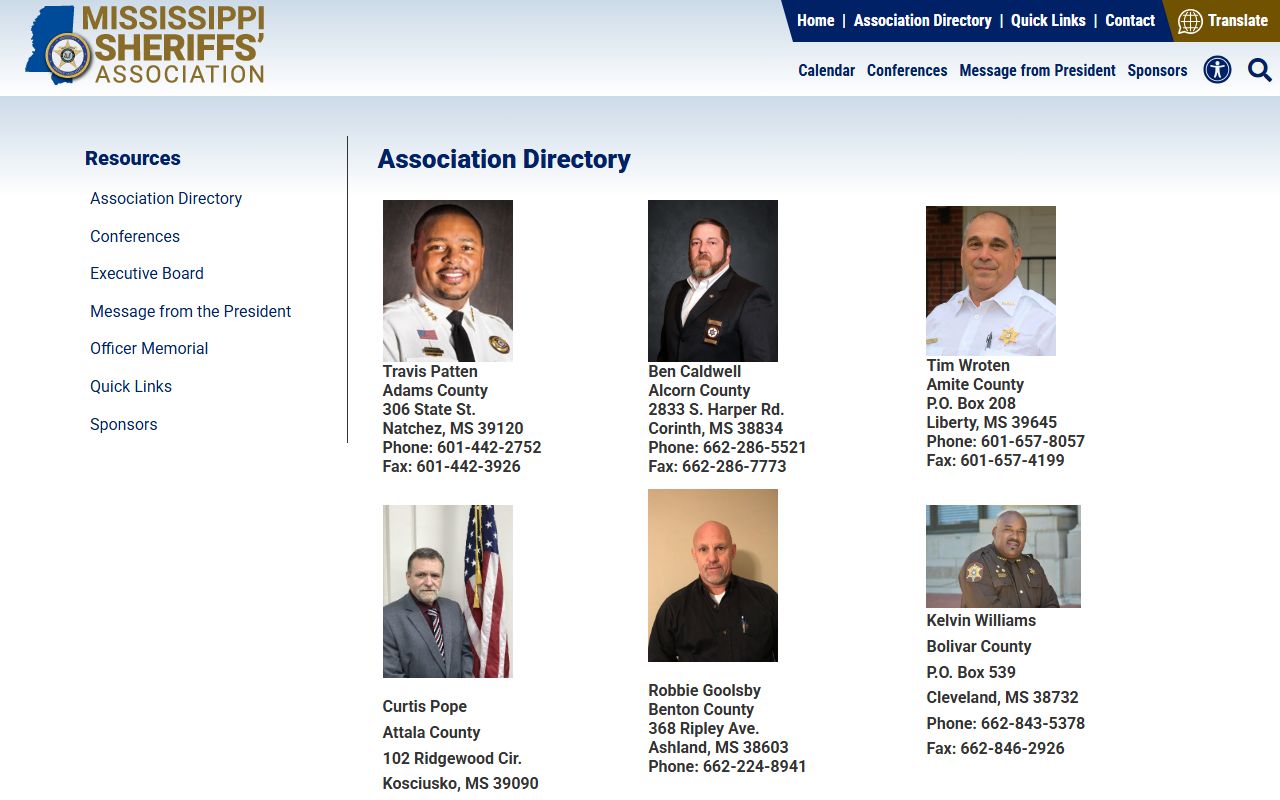
That directory is the fastest way to confirm the current sheriff contact before you call about an arrest. Booking detail, bond amount, and release status usually come back by phone, not on a web page.
Note: Pontotoc County is a call-first county for arrest information, so confirm the jail phone with the sheriff before relying on any third-party number.
How Pontotoc County Charges Get Filed: Complaint, Information, and Indictment
Walk the path forward from the arrest. Booking creates the arrest record, then the charge record begins when a prosecutor files a charging document. The document type depends on the offense and the court. Misdemeanors often start with a complaint or affidavit in Justice Court or Municipal Court. Felonies usually proceed to a grand jury, which returns an indictment that anchors the case in Circuit Court. The three main charging documents work like this.
| Complaint | Information | Indictment | |
|---|---|---|---|
| Filed By | Officer / Prosecutor | Prosecutor | Grand Jury |
| Common For | Misdemeanors | Many felonies | Serious felonies |
| Starts | The case | The case | The case |
In Pontotoc County, felony charges are prosecuted by the First Circuit District Attorney, Jason D. Herring, whose office serves Alcorn, Itawamba, Lee, Monroe, Pontotoc, Prentiss, and Tishomingo counties. The District Attorney can file charges, decline them, move to drop a charge, negotiate a plea, or take a case to a grand jury. Governor Tate Reeves announced the appointment of the current District Attorney in 2024.
Pontotoc County Charge Status Terms
Charges rarely stay frozen. As a case moves, a charge can be amended, reduced, added, dropped, or dismissed. The status shown in the court record tells you where each count stands at that moment, not where it started. Reading the status correctly matters, because a single arrest can list one charge that is pending and another that the prosecutor already dropped. These are the terms you will see most often.
| Status | What It Means |
|---|---|
| Pending | The charge is active and the case has not reached a final outcome. |
| Amended / Reduced | The charge was changed, often to a lesser offense or a corrected statute. |
| Dismissed | The court ended the charge, so the defendant is not prosecuted on that count. |
| Nolle Prosequi | The prosecutor formally chose not to pursue the charge. |
Charges vs. Convictions
Being charged is not the same as being convicted. A charge is an accusation that a prosecutor must still prove. A conviction is the result of a guilty plea or a verdict. Both can appear in the public record, so a careful reader checks the disposition before drawing any conclusion about an arrest.
| Charge | Conviction | |
|---|---|---|
| Stage | Accusation | Verdict or plea |
| Burden of Proof | Probable cause | Beyond reasonable doubt |
| Public Record | Yes | Yes |
Sealed vs. Expunged Records
Mississippi lets people clear some charge records, and the two main tools are not the same. A sealed record is hidden from ordinary public view but can still be reached for limited official uses. An expunged record is treated as if the case never happened. Under Miss. Code Section 99-19-71, qualifying arrests, many misdemeanors, and certain felonies may be expunged by petition in the court where the case occurred. The petition carries a statutory filing fee of $150 under Section 99-19-72, which matches the Pontotoc Circuit Clerk fee schedule.
| Sealed | Expunged | |
|---|---|---|
| Visibility | Hidden from public | Destroyed / treated as never existed |
| Law Enforcement | Limited access | Very limited |
| Eligibility | By court order or statute | Qualifying arrests and offenses under Section 99-19-71 |
Both paths run through the court, not the police. A defendant who wants a Pontotoc County charge cleared files in the same court that handled the case, and the clerk updates the index once the judge signs the order. You can read the expungement statute itself on Justia.
Pontotoc County Charge Codes and Severity Levels
Every charge ties back to a statute, and that statute sets the severity level. Mississippi sorts offenses into felonies and misdemeanors, with city ordinance violations handled in Municipal Court. A felony carries the most serious exposure and is prosecuted in Circuit Court. A misdemeanor is the lower tier and usually stays in Justice Court or Municipal Court unless it is bound over. The code in the record points to the exact section of the Mississippi Code, so the wording, the level, and the possible penalty all flow from that citation.
One arrest can produce several separate charges. A traffic stop, for example, might list a primary offense plus added counts, and each count carries its own code and its own status. Read the charges one at a time, because they can be dismissed, reduced, or convicted independently of one another.
A charge entry usually carries more than a name. Alongside the offense wording and statute, the record may show the arresting agency, the booking date, the bond amount, and the court that handles the case. In Pontotoc County, a misdemeanor charge often appears first in Justice Court with a bond and a first appearance, while a felony shows up in Circuit Court once a grand jury returns an indictment. Following the same person across both courts is sometimes the only way to see the full charge history from a single arrest.
Statewide Charge and Criminal History Lookups
County records show local charges, but some lookups roll up to the state level. When a defendant is sentenced to state custody, the case moves to the Mississippi Department of Corrections. The MDOC site runs an inmate search and a parolee search that cover state offenders rather than pretrial county detainees. Open the MDOC search to look up a state inmate by name or by MDOC identification number.
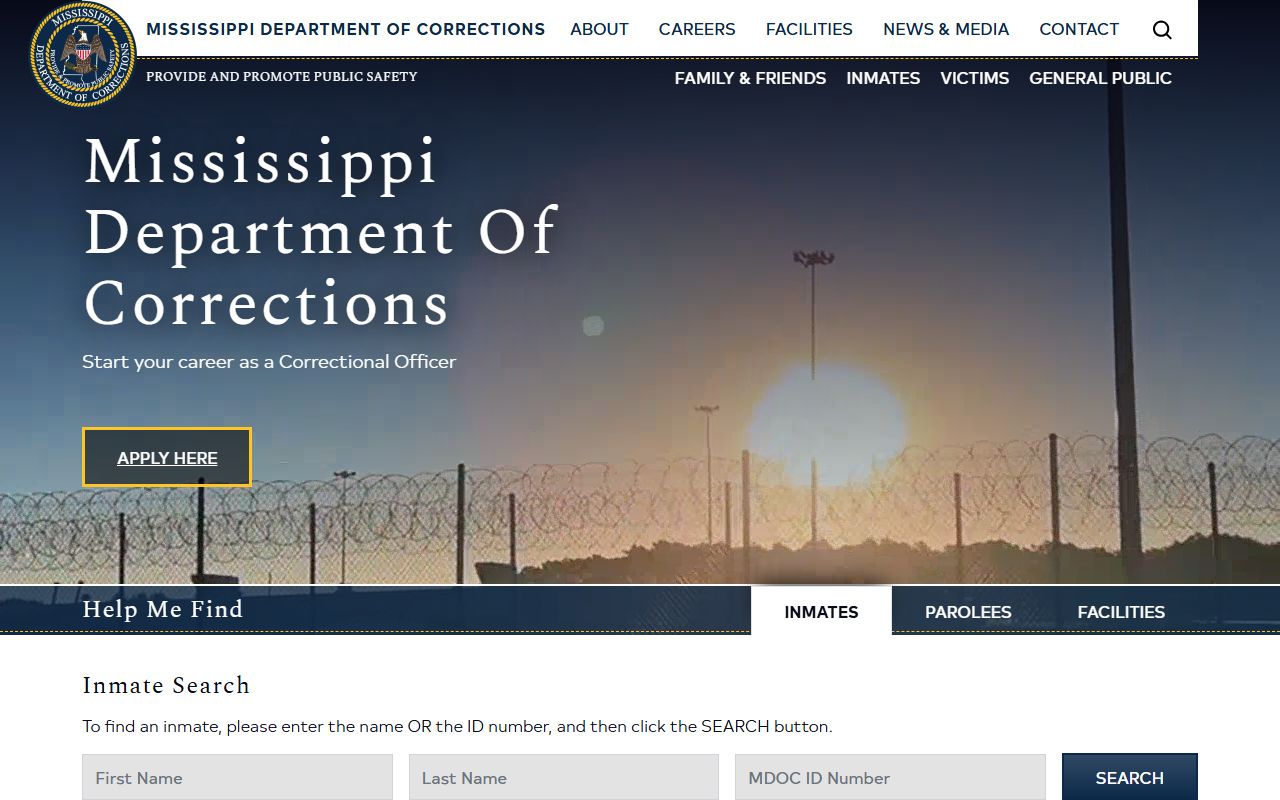
That tool helps once a Pontotoc County charge has reached a conviction and a state sentence. Mississippi also publishes an alternate inmate-search path that lands on the same MDOC system.
The state portal offers a direct inmate lookup that displays fields for first name, last name, and MDOC identification number. It is a second door to the same custody data.

For custody status and release alerts, victims and the public can use a separate notification service instead of calling repeatedly.
VINELink is a national victim-notification and custody-status system that works as a fallback for tracking an inmate's status. Register on VINELink to receive custody alerts tied to a name or case.
Used together, these state tools fill gaps that the county leaves open, since Pontotoc County has no public web roster of its own.
Note: MDOC custody data covers people in state custody, so a recent county booking may not appear there until a case is sentenced and transferred.
Background Checks and Pontotoc County Charge Records
A casual lookup of an arrest record is not the same as a formal background check. Public registries and court indexes let anyone read what is open, but a regulated background check for hiring, housing, or credit must follow federal rules. One public registry worth knowing is the state sex offender list, which is searchable by name, by area, and by ZIP code. The Mississippi Department of Public Safety hosts the sex offender registry for the whole state.
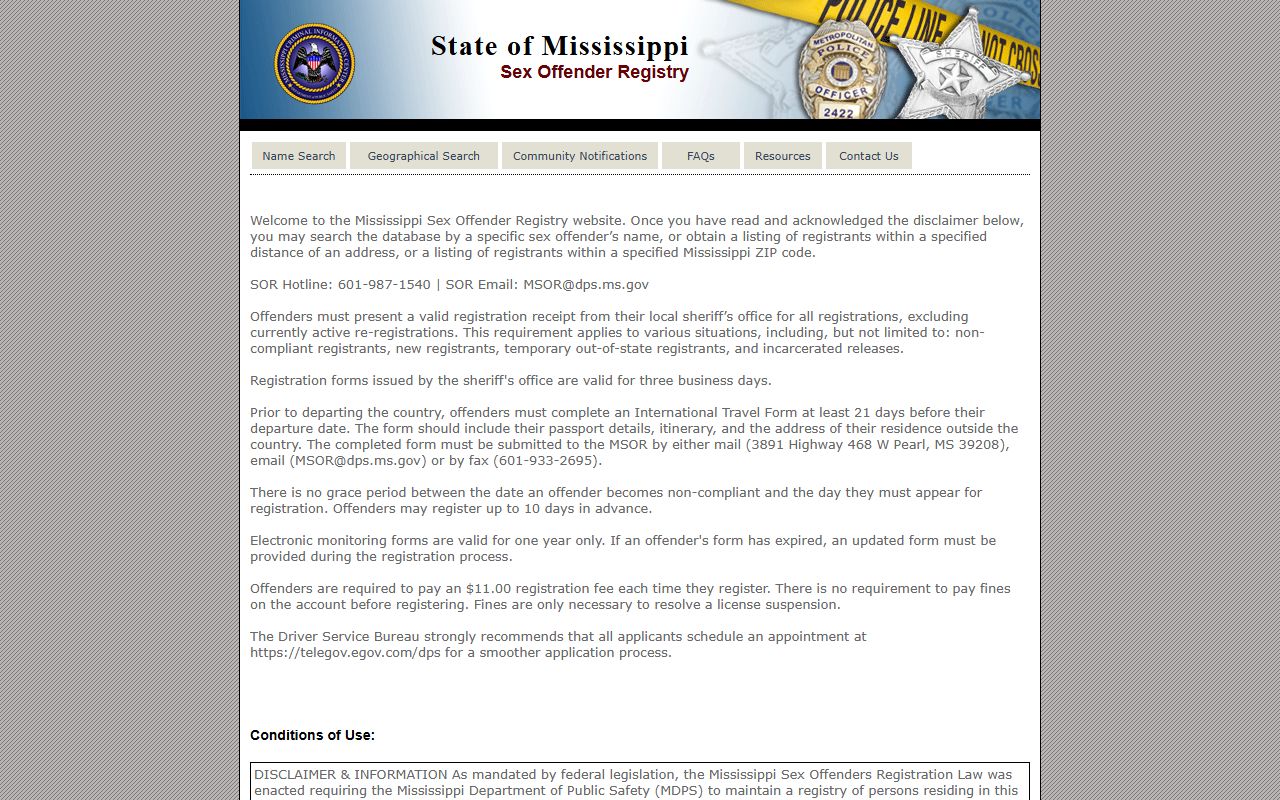
That registry is a public-safety tool, not a general criminal-history database, and it requires accepting the search conditions before results appear. For any other purpose, weigh whether a regulated report is the right route.
Important: This site is not a consumer reporting agency under the FCRA, and its information may not be used for employment, tenant, credit, or insurance screening.
Restricted Charge Records in Pontotoc County
Not every arrest or charge record is open. Mississippi law draws a line between public incident reports and exempt investigative files. Under Miss. Code Section 25-61-12, law-enforcement investigative reports are exempt, but the basic incident report stays public. An incident report generally includes the charged or arrested person, the offense time, date, and location, and known property information, while victim-identifying details may be withheld.
Other records are sealed by their nature. Youth Court records are confidential under Miss. Code Section 43-21-251 and are not ordinary public records. Sealed and expunged cases are removed from public access by law or court order. Dismissed or expunged charges should drop out of the open index once the court signs off. When you request records, the Mississippi Public Records Act opens nonexempt material, but it does not override confidentiality, so sealed files, juvenile matters, and active investigations may be redacted or refused.
Note: An open incident report can confirm that an arrest happened even when the deeper investigative file is exempt from release.